2026
Life Mirror
Role
Research, design and development
Research
23 semi-structured interviews
Recognition
MUSE Design Awards Silver
Status
Developed for release in 2026
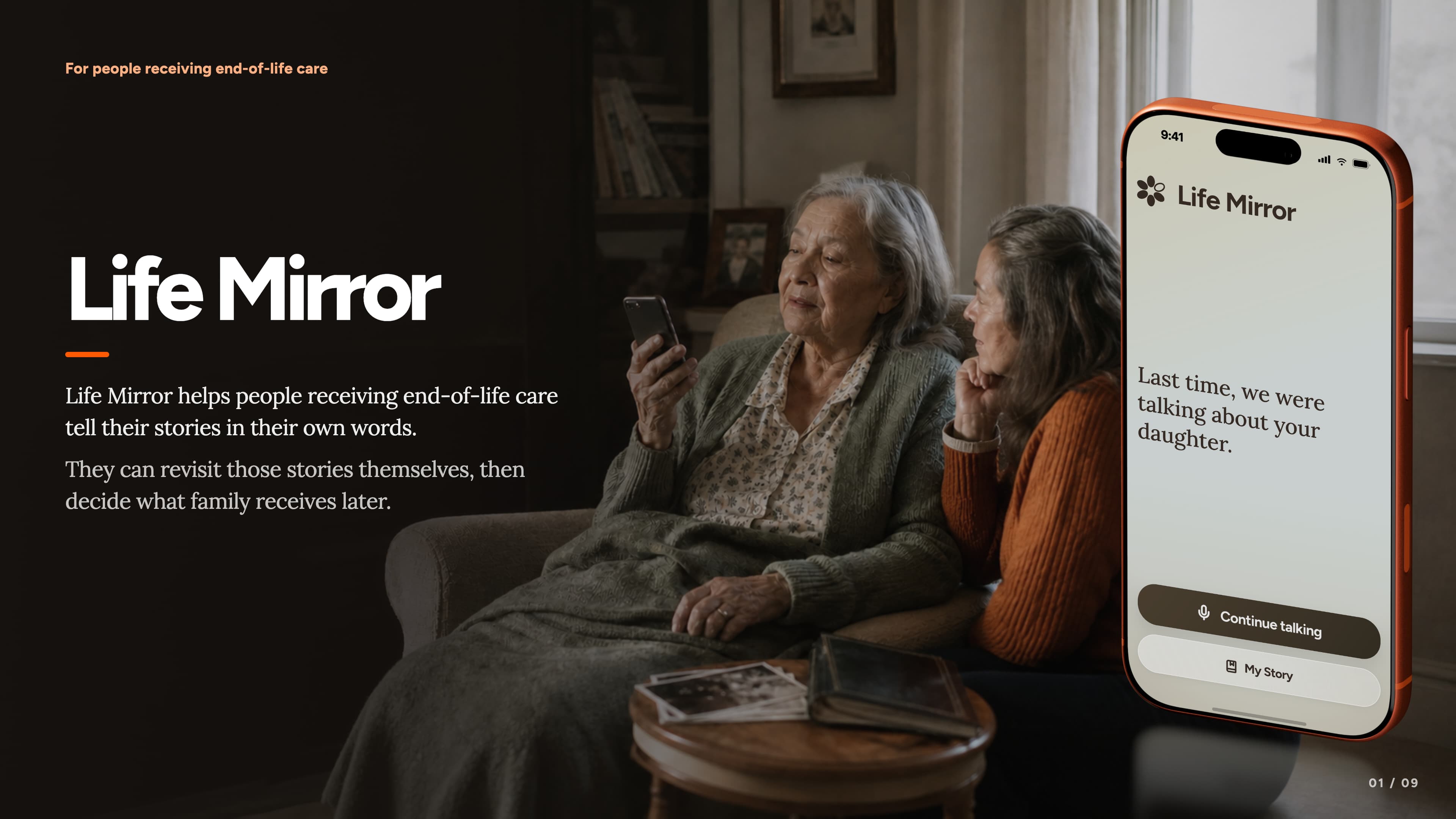
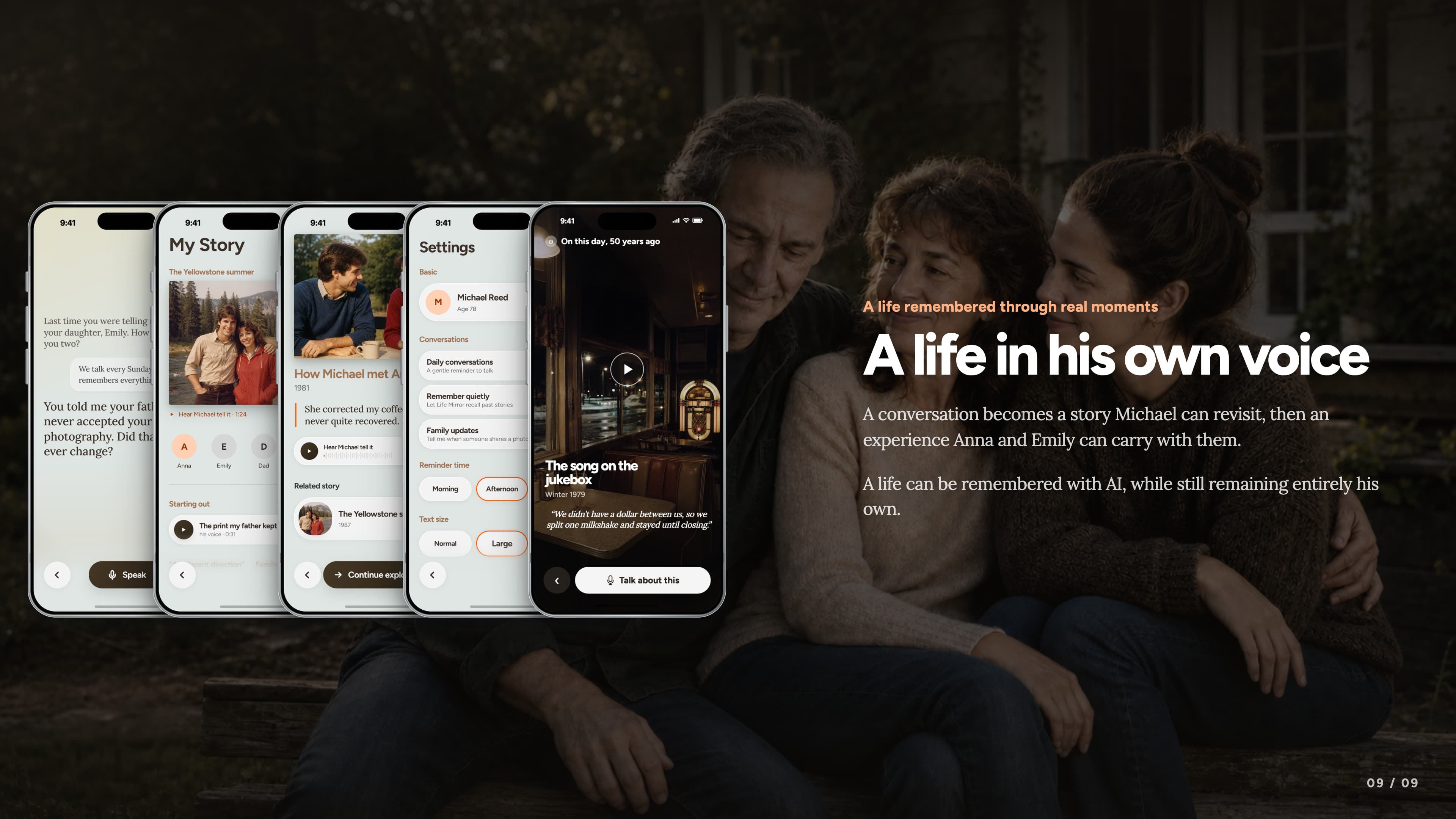
A life can be remembered with AI while still remaining entirely your own.
Life Mirror helps people receiving end-of-life care preserve personal stories in their own words, photographs and recorded voice, then decide what their family may experience now or later.
It starts with conversation instead of a memoir to write or an archive to sort. AI reduces the work of remembering, organizing and connecting. It does not imitate the person or step into a human relationship.
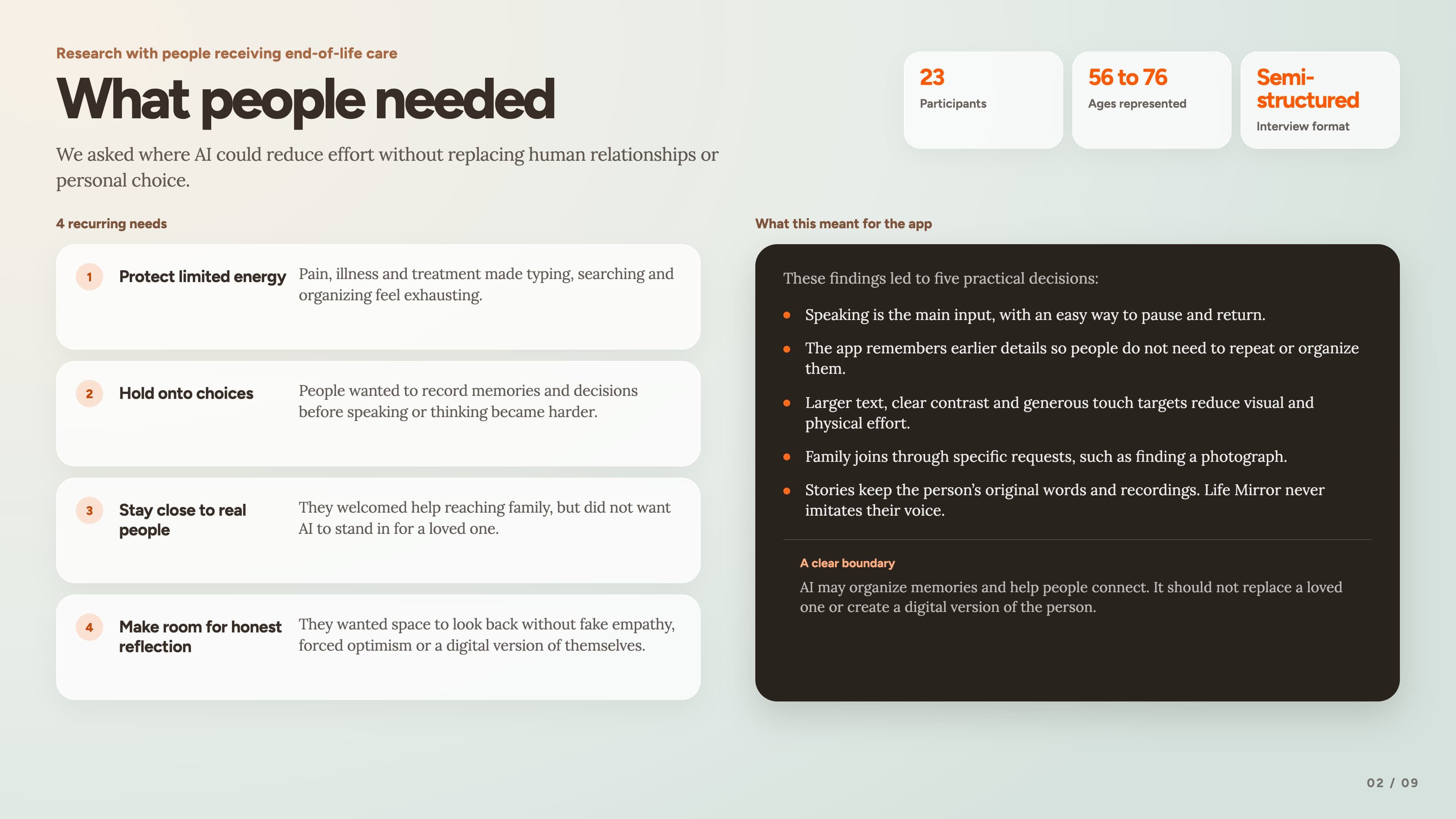
Research
Start with what people wanted to protect
We interviewed 23 people receiving end-of-life care, aged 56 to 76. The goal was not to ask where AI could be added. It was to understand where assistance could reduce effort without taking away authorship, privacy or the presence of real people.
01
Protect limited energy
Pain, illness and treatment made typing, searching and organizing feel exhausting. People wanted help that preserved energy for what still mattered.
02
Hold onto choices
Participants wanted their own memories and decisions recorded while speaking and thinking were still possible, without AI inferring a new choice for them.
03
Stay close to real people
They welcomed help reaching family, but did not want AI to occupy the place of a child, partner, friend or caregiver.
04
Make room for honest reflection
People wanted space to look back without generic reassurance, forced optimism or a digital version of themselves.
Interaction model
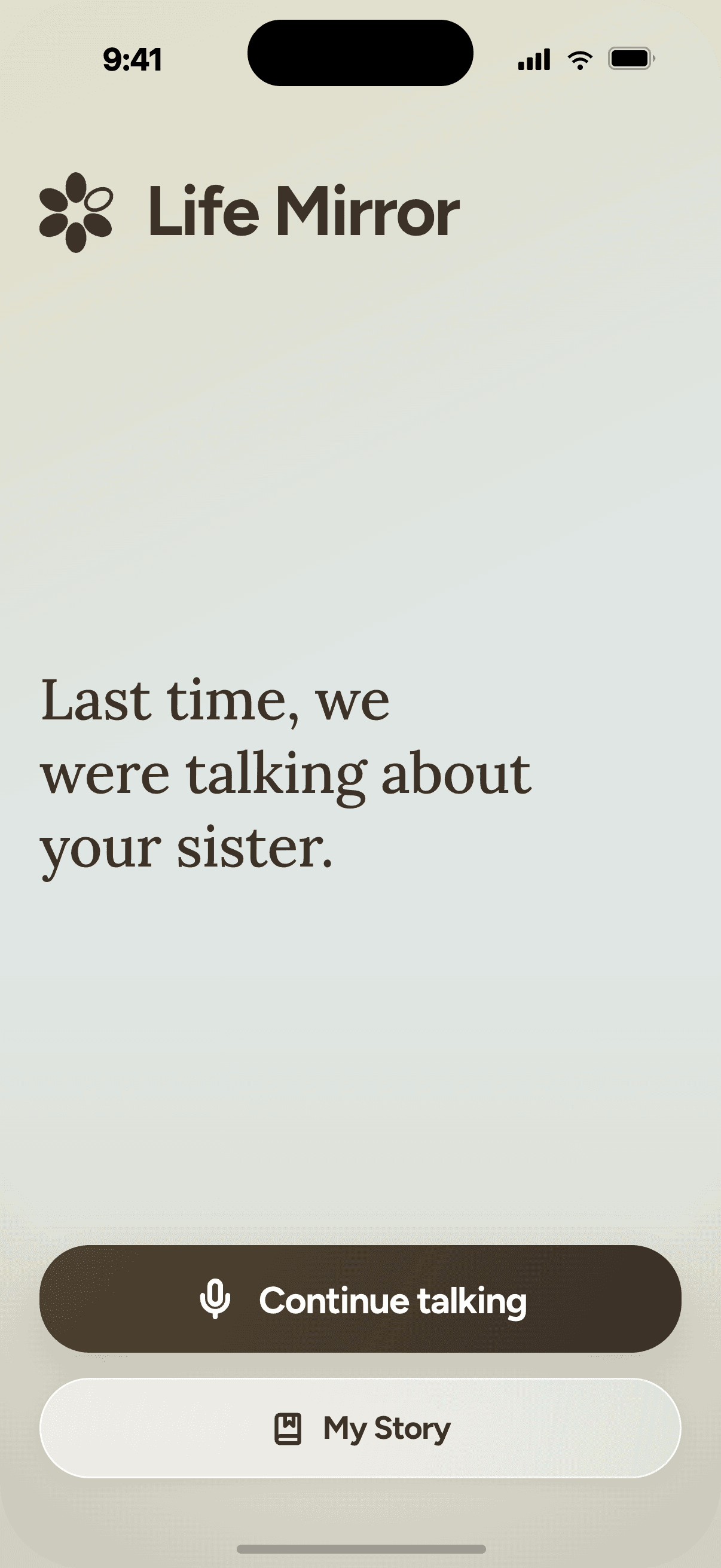
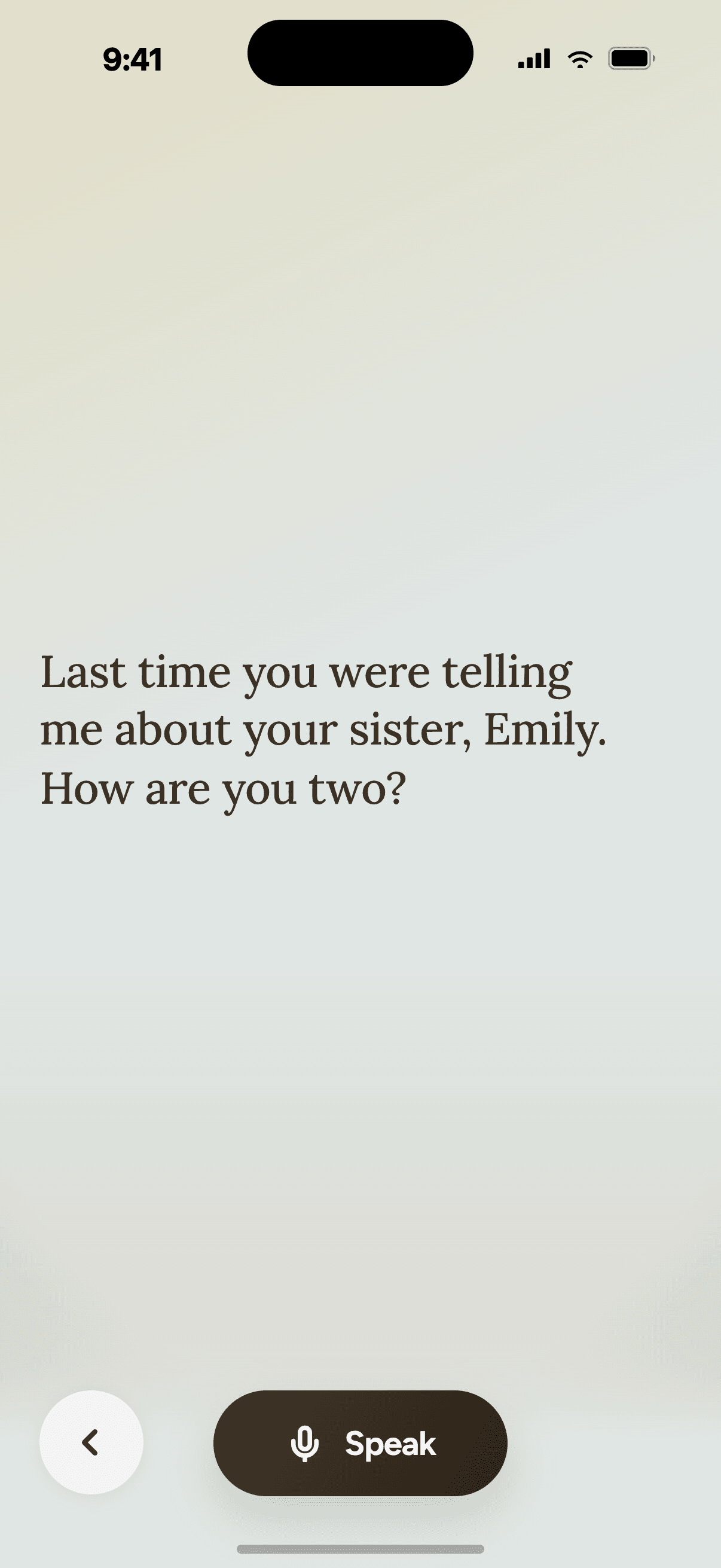
Conversation replaces composition
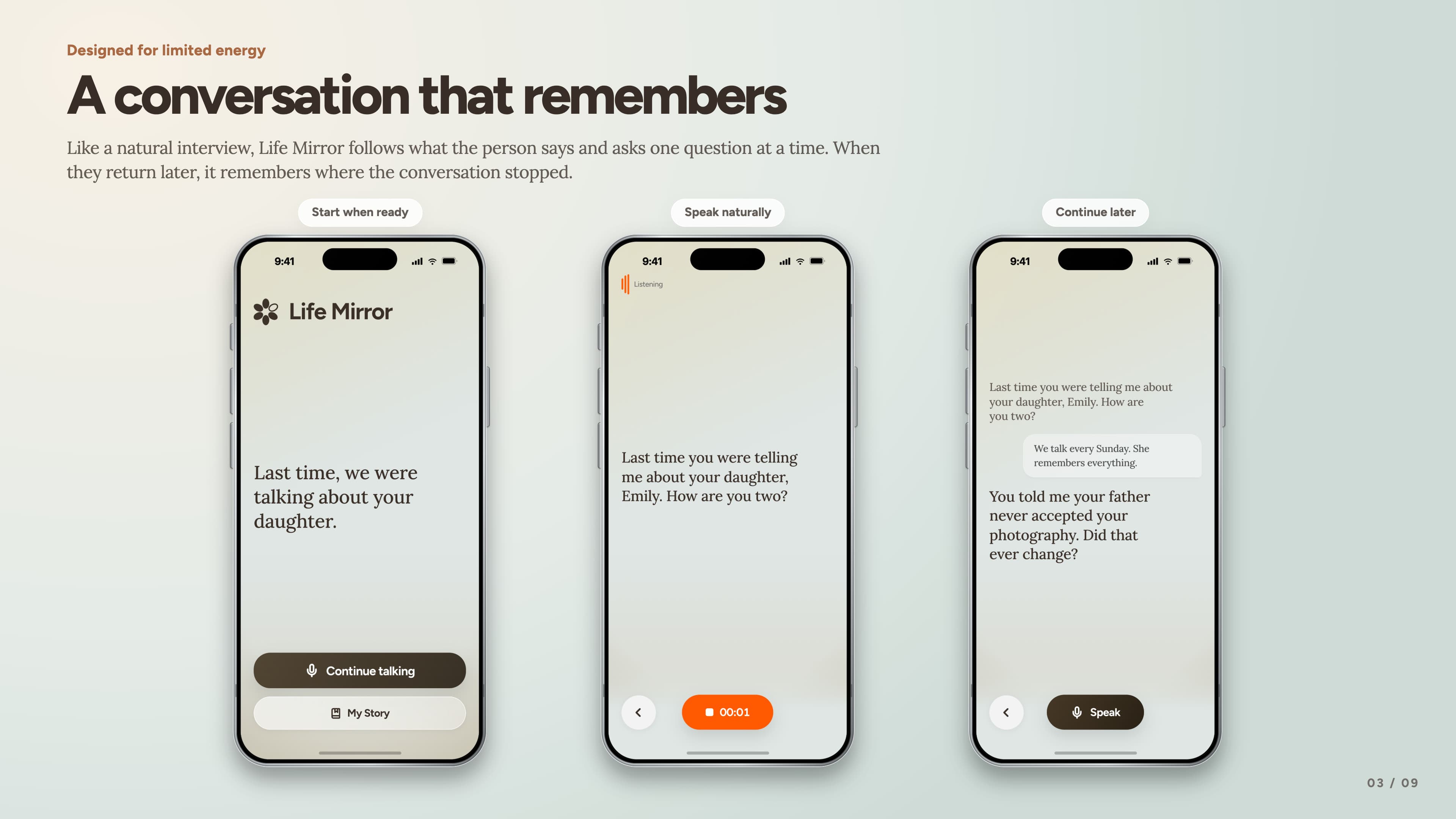
Speaking is the main input. A prompt feels closer to an interview than a blank page, and the app remembers earlier details so the person does not have to repeat or organize them. Large type, strong contrast and generous touch targets reduce visual and physical effort.
The boundary
AI may organize memories and help people connect. It may not become the person.
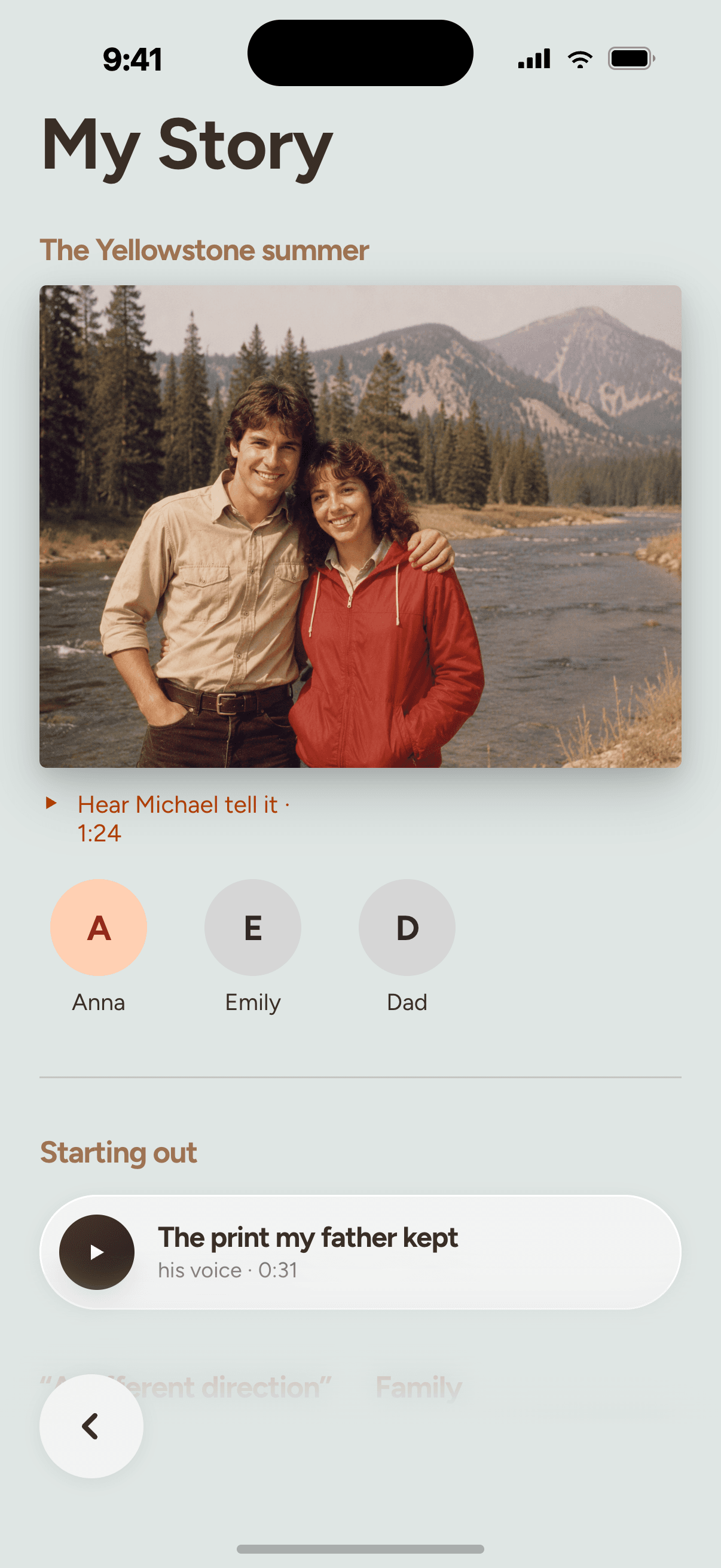
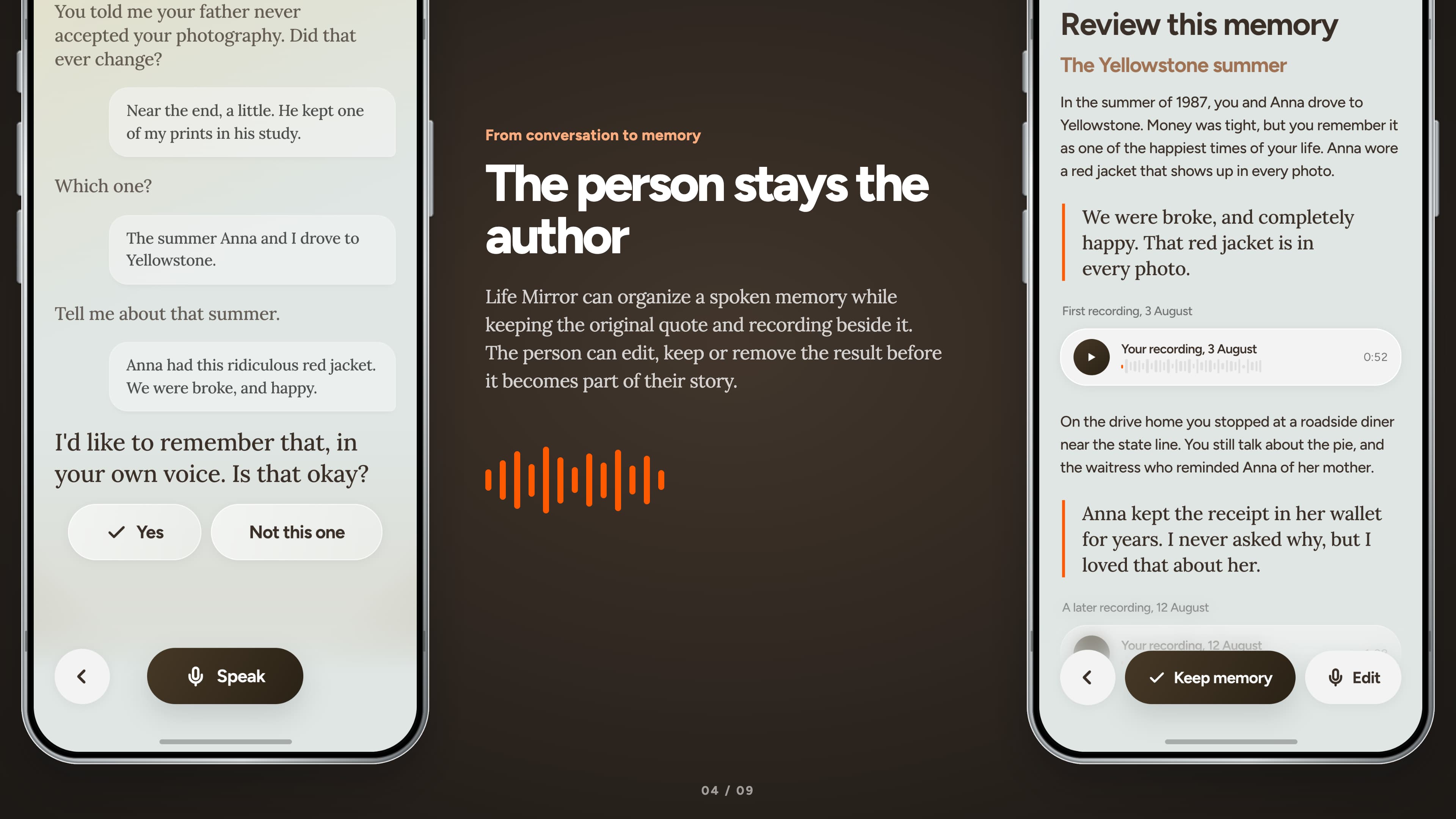
Every organized memory keeps the direct quote, original recording and selected photograph beside it. Life Mirror never creates a synthetic version of the person's voice, and family participation stays specific to the request they receive.
One continuous memory
Follow the Yellowstone story from conversation to legacy
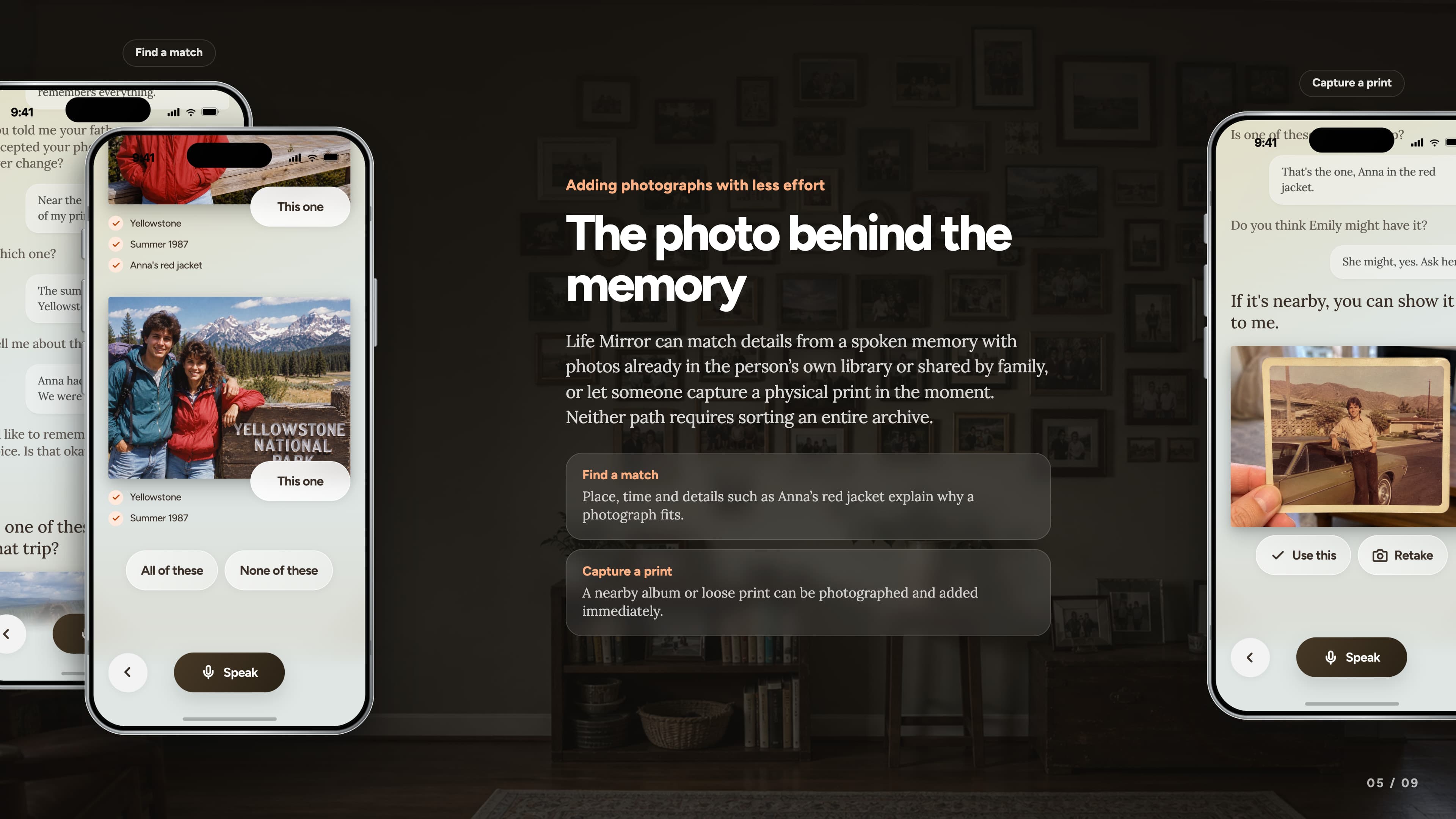
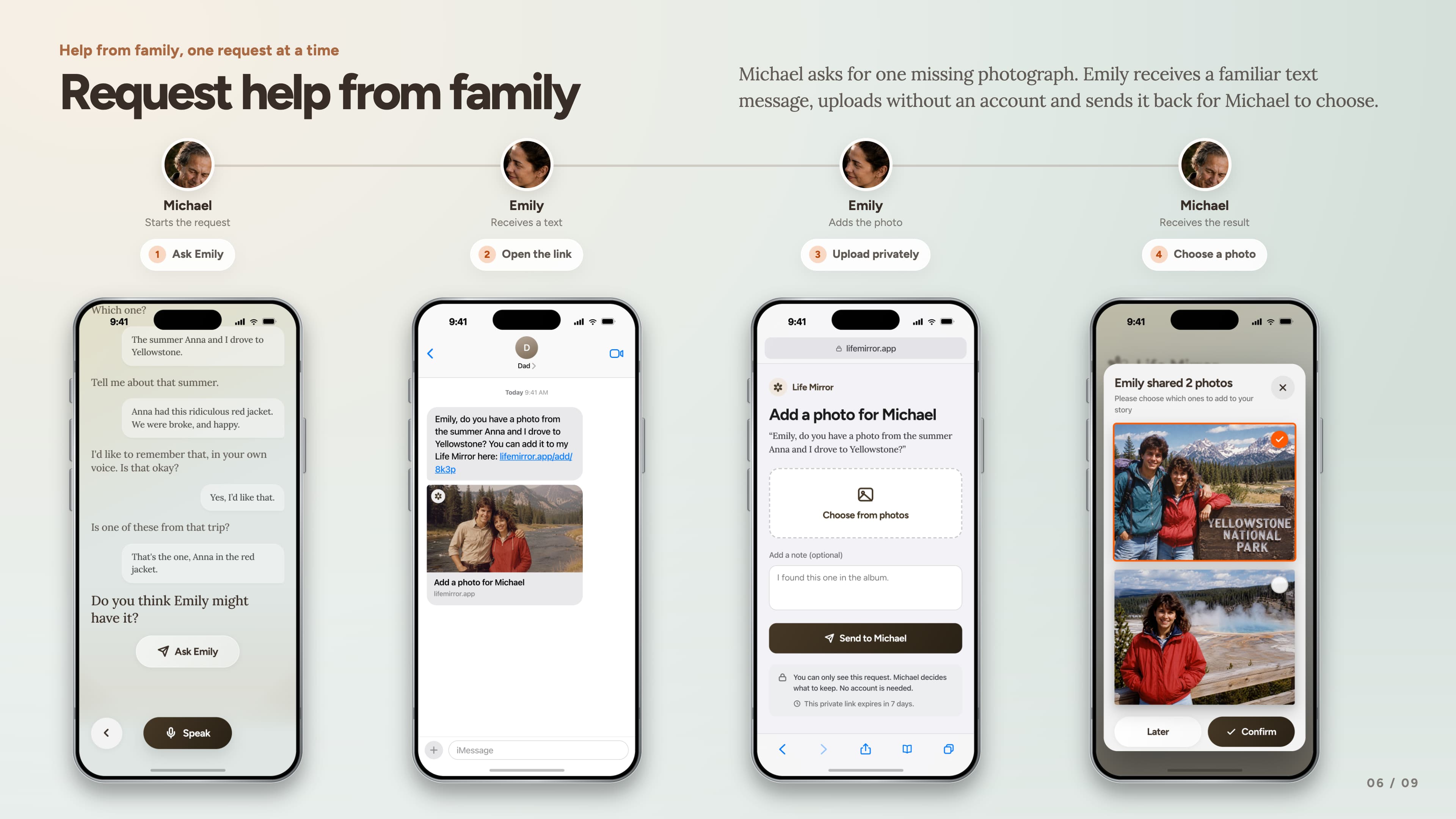
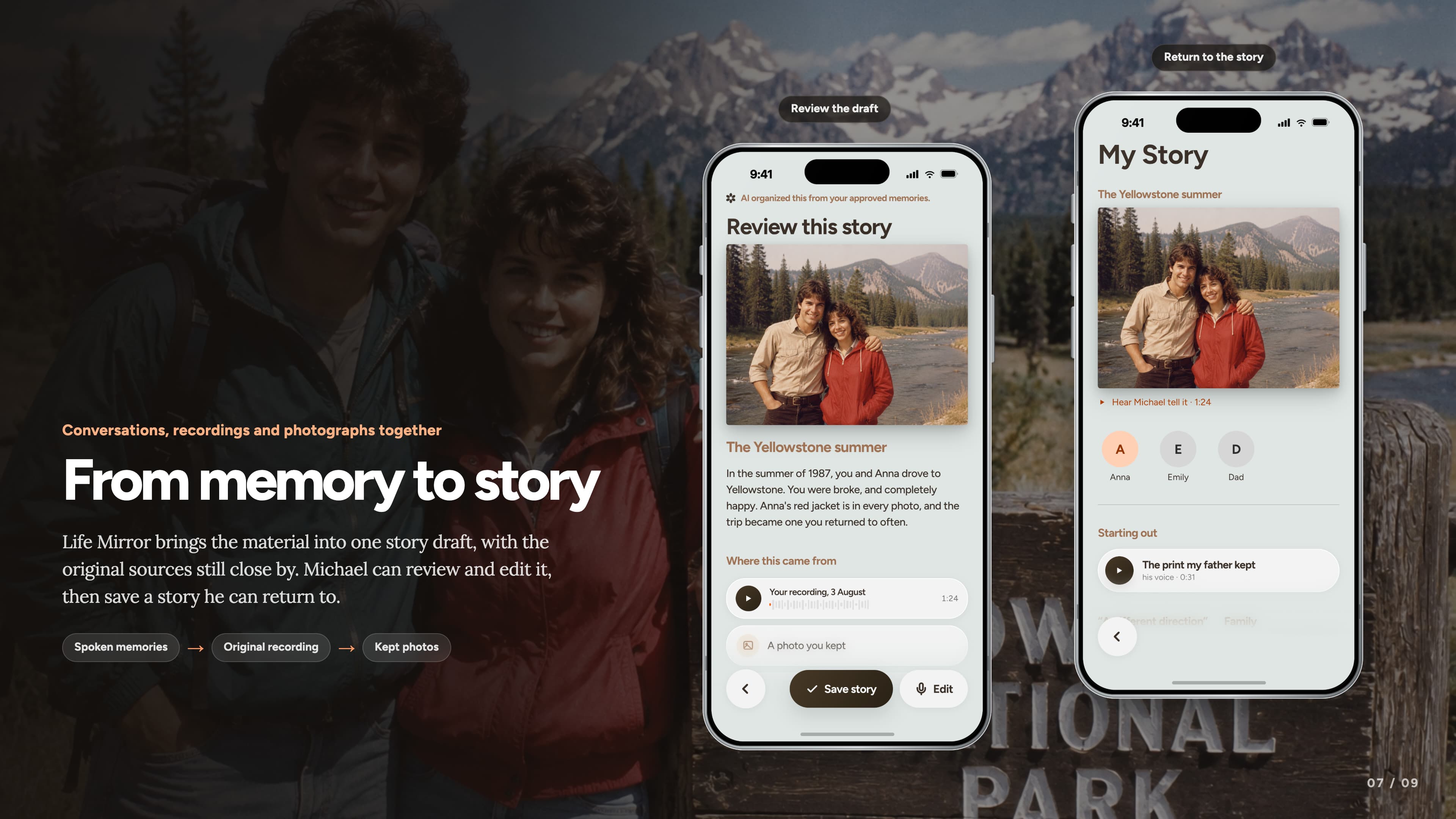
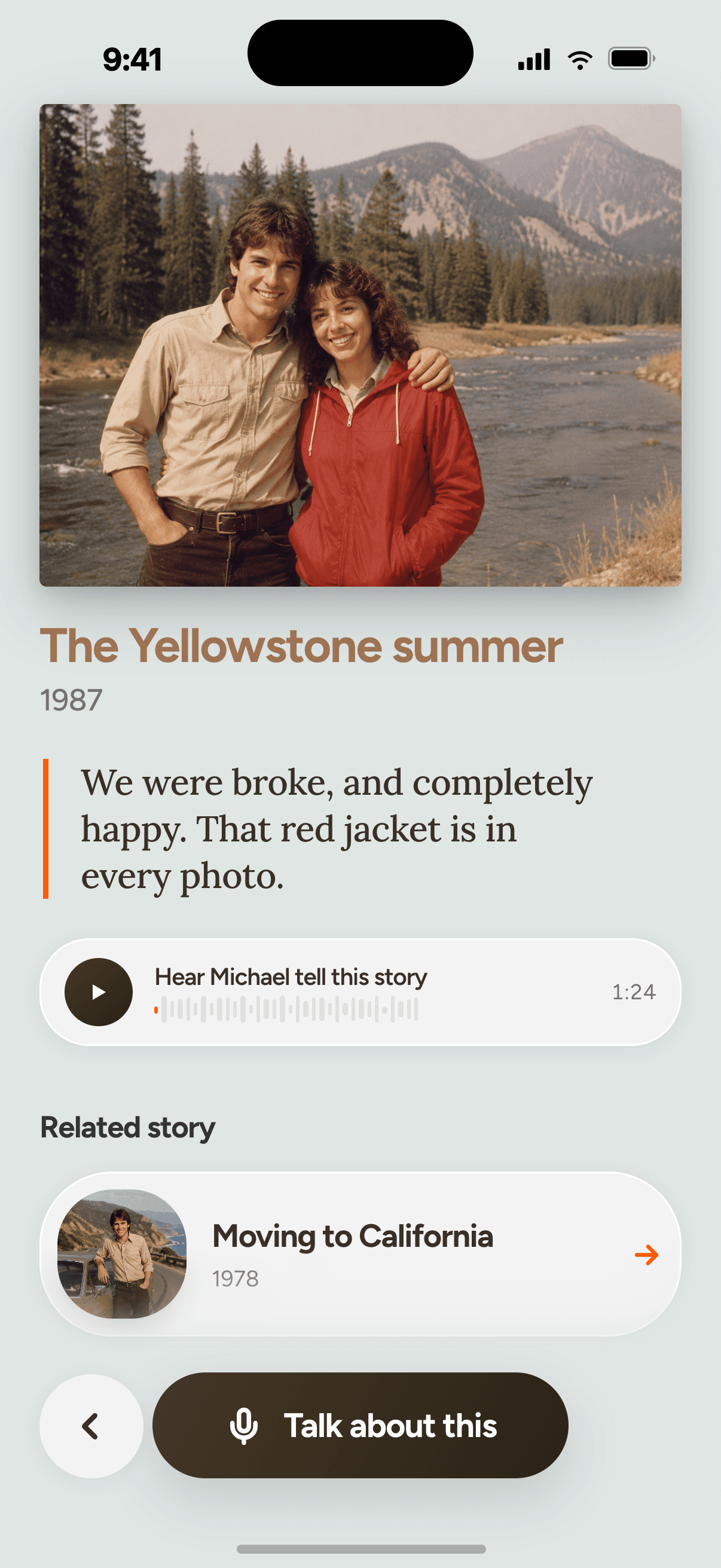
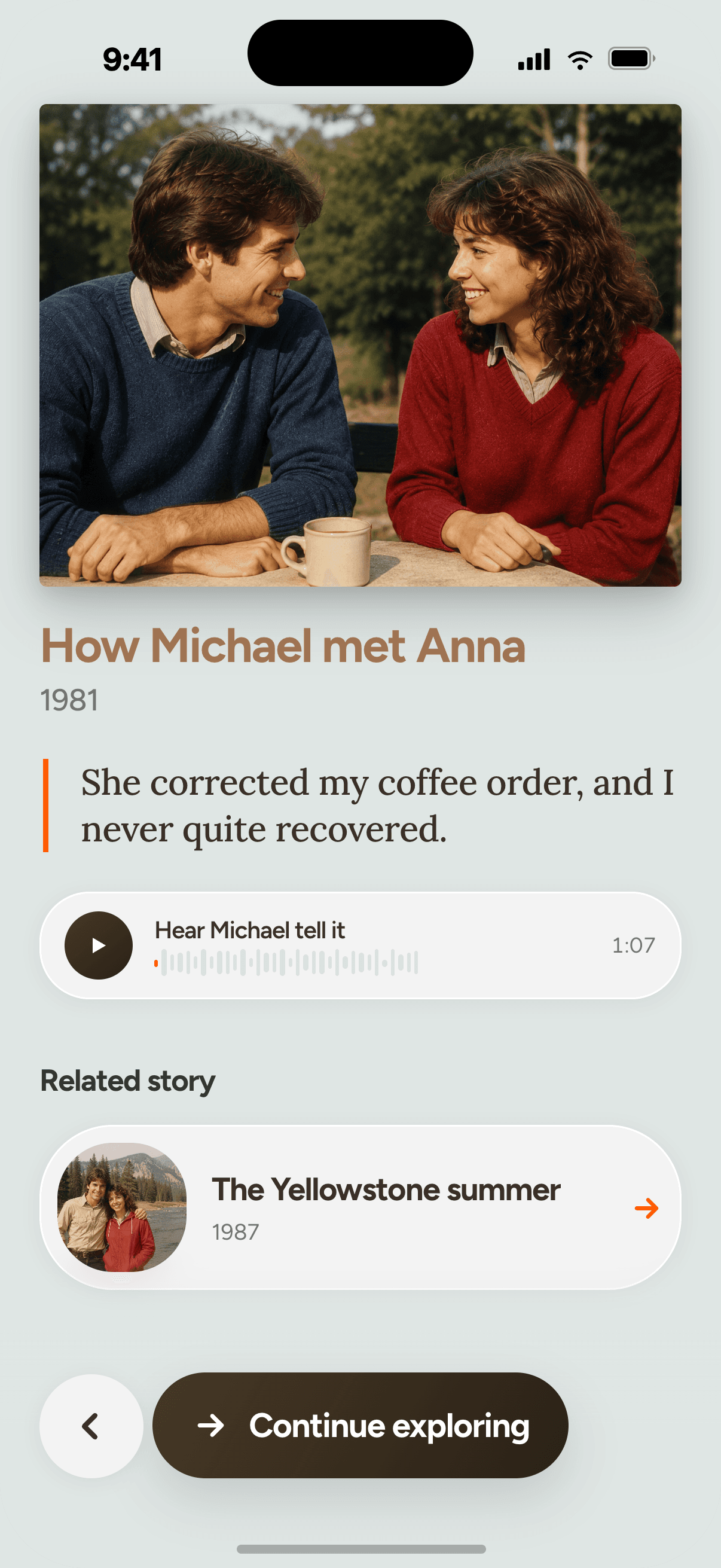
The experience follows Michael, 78, through one memory. A conversation about his daughter leads to a Yellowstone trip in 1987. Anna's red jacket helps locate a photograph. Emily contributes another through a private request. The materials become a story that Michael can review, save and share on his own terms.
Two audiences
A story can matter now and later
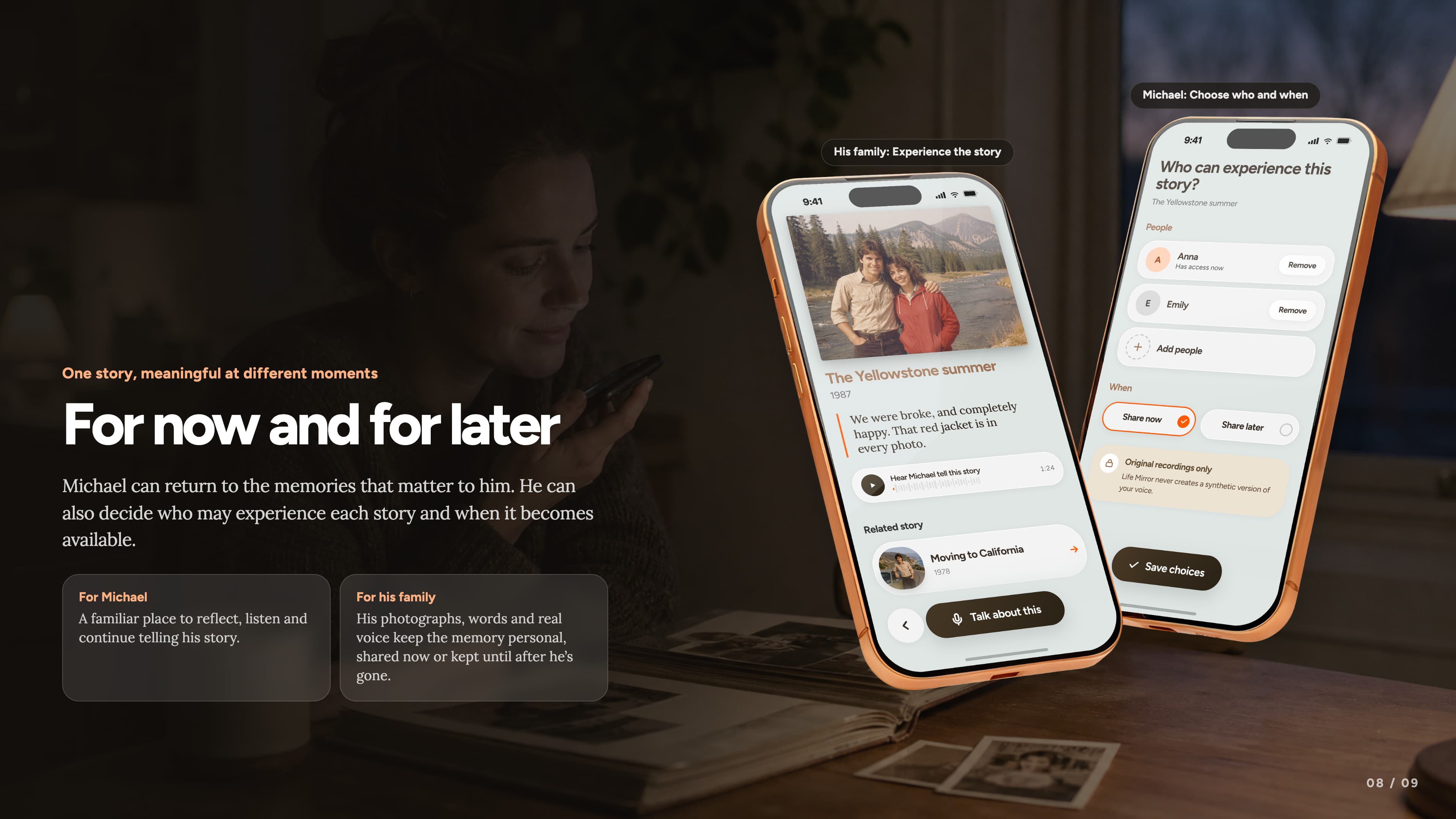
For Michael, My Story is a familiar place to reflect, keep talking and revisit what he has chosen to preserve. For Anna and Emily, it is a way to experience him through real photographs, direct quotes and his own recorded voice, shared when he decides.
What comes next
Life Mirror has been developed as a working iOS product and is planned for release in 2026. The next phase is moderated usability testing with people receiving end-of-life care, alongside accessibility review and feedback from palliative-care professionals.